Sunday, 21 February 2010

A Lancastrian in Yorkshire; The Bull at Broughton

After our morning spent discovering the secrets of the rhubarb triangle in Yorkshire last weekend I felt the need to redress the balance in favour of my Lancastrian roots. Now even I can't pretend that Skipton, gateway to the Yorkshire Dales and all that, is firmly entrenched in the Red Rose County. However, much to my delight it would seem that this part of Yorkshire has been invaded…. by a Lancastrian.

The Bull at Broughton, just outside Skipton, is the latest addition to Nigel Howarth & Craig Bancroft's Lancashire-based "Ribble Valley Inns" pub company. It joins The Three Fishes at Mitton, The Highwayman near Kirkby Lonsdale and The Clog & Billycock at Pleasington, nr Blackburn.
The RVI venture is part of the wider Northcote group of companies, which also includes the Michelin Starred Northcote Manor in Langho, and the group is co-owned by the two Lancastrians. Nigel Howarth is the chef behind the food and is now known nationally for his appearance and success on BBC 2's Great British Menu. His Lancashire hotpot was the winning main course in the last series and is probably the dish for which he is now best renowned and indeed typifies what he is all about - British classics perfectly executed with a modern twist.

Having visited both the Three Fishes and The Highwayman before, we knew roughly what to expect from The Bull; the same formula has been applied to all of the RVI pubs. I do not mean this in the typically naff generic chain pub sense, as each venue still manages to retain its own identity, but there is definitely a common premise that runs through them all. They are not billed as 'gastro pubs' but a more a modern day version of a ‘local’, serving great food and ale in a hospitable and relaxed environment. The philosophy behind each is to source the best ingredients from local artisan suppliers and to create a seasonal menu inspired by genuinely regional specialties. Add to that a good range of local ales and present it all immaculately in a building full of atmosphere & character. From the trademark spacious layouts, the extensive use of wood, bare flagged floors, solid wood furniture and real fires to the neutral modern décor and pictures of suppliers that adorn the walls and table mats, the pubs make the perfect informal and welcoming modern country inn.

The difference with the Bull is the location and therefore the emphases on Yorkshire dishes and produce. As usual the suppliers are all name-checked on a map on the back of the menu, which is littered with references to Yorkshire produce. There were 4 local cask ales on offer – including offerings from Copper Dragon & Dark Horse Breweries, both just down the road in Skipton, and Ilkley Best from the Ilkley Brewery.

I could happily eat anything from this menu but opted to start with William Hunter’s deep fried parsnip fritters with cumin dip - chunks of parsnip deep fried in a crisp batter, the insides had a lovely soft texture and the fragrant slightly sweet flavor of the parsnips was complimented perfectly by the warm hint of cumin in the creamy dip.

Dave went for the Gloucester old spot chipolatas (Cumberland, pork & black pudding), served with an English mustard relish, and assured me they were great sausages.
Both starters were served with cocktail sticks to pick with, almost like a bar snack or finger food and proved the perfect way to start a pub meal.

For mains it was a difficult choice, I was torn between one of the mutton dishes and the English rose veal escalope with capers, nut brown butter and Pearce’s organic fried egg. In the end we both went for mutton, a largely ignored and underrated meat in Britain these days it is nice to see it making an appearance on restaurant menus. I had the Herdwick mutton pudding with caper and parsley mash and black peas. It was a revelation, a delicate suet crust packed with tasty meat and kidney, the caper mash offsetting any greasiness from the rich mutton.

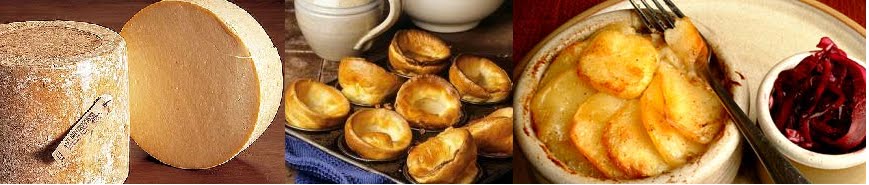
Dave’s mutton hotpot with picked red cabbage met with his expectations, which were exceedingly high given the man’s reputation for what is his signature dish.

Pudding was a toss up between Burnt English custard with stewed Tomlinson’s Yorkshire rhubarb and a Bramley apple pie with carnation milk and custard and a slice of Wensleydale cheese, made to serve 2. We went for the apple pie and were assured by the staff that we wouldn’t be disappointed - we weren’t. Not too sweet, the thin golden pastry crust was packed with tart apples and served with a lovely custard, speckled with vanilla. The carnation milk added a touch of sweet creamy nostalgia, I haven't had this since I was a child when I ate it with tinned peaches!

Service was the way it should be throughout - efficient, friendly and knowledgeable. At around £42 for a 3 course meal it was an absolute snip and I was well impressed with accomplished way everything was done here.

If I am honest, for me there is actually a slight "footballers' wives" kind of vibe that transcends all of the RVI pubs. It is characterised by the white Audi & BMW 4x4's with tinted windows that hog the car parks and the well-heeled clientele, typically wearing designer clothes, sunglasses and the wives carrying Gucci handbags. This combined with the elaborately worded menus and impeccable surroundings mean that maybe it is all just a bit too perfect. I guess if that is the only criticism I can level at them then I really am just being ridiculous. They are clearly doing something right here and it certainly won’t stop me going back for more!

There is an overriding sense of quality here that transcends the everyday British pub. It makes you wonder why more pubs cannot achieve the standards set by the RVI team but one thing is for sure, this is one Lancastrian that can hold his head up high over the border.

The Bull
Broughton, Skipton, BD23 3AE

http://www.thebullatbroughton.com/

Saturday, 13 February 2010

A Magical Mystery Tour; the Rhubarb Triangle

West Yorkshire has been the home of the ‘Rhubarb Triangle’ since the late 19th century. Despite the apparent lack of paranormal activity and notorious disappearances, the facts about this little known phenomenon are still often vague and shrouded in mystery. So in order to get to the bottom of the peculiar goings on in deepest Wakefield at this time of year we embarked on a mini rhubarb adventure.
It started with a phone call a week ahead to check availability of the tour, as advised on the website. I was told that they were very busy but we could indeed be squeezed in on Saturday 13th February at 10.30am. The booking was provisionally made and I posted a cheque at the soonest opportunity to confirm, we would then be emailed our tickets and directions to the location.
We were off to discover the secret world of the Rhubarb Triangle and to meet the ‘High Priestess of Rhubarb’!

The Rhubarb Triangle owes its name to the areas history of rhubarb growing, more specifically to its position at the epicentre of "forced" rhubarb production. The first misnomer that needs to be cleared up is its location. The Rhubarb Triangle is often described as being the triangular area between the cities of Leeds, Wakefield and Bradford (the green triangle on the map). Other sources give the points of the triangle as Leeds, Morley and Wakefield (the blue triangle on the map). However both of these claims are rhubarb (pardon the obvious pun) as the largest area of rhubarb cultivation actually falls outside both of these triangles. It more accurately covers the triangular 9-square-mile area of land formed between Morley, Wakefield and Rothwell (the red triangle on the map).

Map courtesy of Yorkshire Gardener Sue from Green Lane Allotments

In fact much of the rhubarb these days is grown around the village of Carlton and this is where we were heading.


On arrival at Oldroyd's Farm we were met by Janet Oldroyd Hulme (AKA the ‘High Priestess of Rhubarb’). The tour started with Tea / Coffee and Biscuits and then we were taken back in time to 2700BC to trace rhubarb’s ancient history. Rhubarb (actually a vegetable, not a fruit) is originally native of Siberia and since early times has been highly prized for its medicinal properties. In fact, back to the modern day and only this week it was announced that this super food has now been linked with the prevention and possible treatment of cancer.

Although not native to the UK Rhubarb was found to flourish in Yorkshire’s cold, damp soils.
The forcing process was discovered by chance in the early 19th Century, but it wasn't until 1877 that Yorkshire became the first place in the world to build special sheds to grow it in. In its heyday there were more than two hundred growers in the Rhubarb Triangle and it produced 90% of the world's winter rhubarb. It was grown, picked and whisked away to London via the rail network on the "Rhubarb Express", to be sold at Covent Garden and Spitalfields markets and on into Europe. I wondered if the trains left from Platform nine and three quarters but didn't dare to ask.
After World War II the industry sadly went into decline and producers went bankrupt or were forced to sell up as other, more exotic fruit became widely available and more popular. Now there are just a handful of growers left in the area; 12 to be precise. Leading the renaissance is the Oldroyd family, now into its fifth generation of dedicated rhubarb growers. Janet leaves you with no doubt as to her passion for this crimson stalk.

We were then introduced to the dark art of rhubarb forcing! Each winter rhubarb crowns (established root systems) are transferred indoors into dark, heated nursery sheds to be "forced". Anything referred to as being "forced" would generally have bad connotations, particularly in relation to food. In the case of rhubarb though, it describes the process of growing the plants at an accelerated rate in warm, dimly lit conditions a process that actually results in a superior product. The forced stalks are tender, sweet, and a distinctive bright pink in colour. Known as "Champagne Rhubarb", it is a seasonal delicacy and can fetch much higher prices than its more fibrous and lip-puckeringly sour outdoor equivalent that has given rhubarb such a bad reputation.
Once inside the secret word of the low, dark forcing sheds the ambiance is eerie, almost other worldly. With the giant heaters turned off, in the silence you can actually hear the rhubarb growing; it is a distinctive "pop" as the buds of new stalks burst open. The grotto-like shed runs as far as the eye can see, and the rhubarb emerges in the flickering candlelight. Janet describes it as "almost like a religious experience" and without doubt it is strangely atmospheric, even magical.


The Yorkshire rhubarb growers are currently waiting on a decision from Brussels on an application for Protected Designation of Origin (PDO) status for their crop, to allow them to officially name their product "traditionally grown Yorkshire rhubarb" and prevent cheap imitations from impostors, such as the Dutch. The decision is due in the next few days and hopefully forced Yorkshire rhubarb will then join the elite list of protected regional foods and put the Rhubarb Triangle firmly on the map.

E.Oldroyd & Sons Ltd
Carlton Village, LS26 0ST
Tours run from January to March.

Wakefield Food, Drink and Rhubarb Festival runs from 26th to 27th February 2010.

Saturday, 9 January 2010

The best thing since sliced bread: Bondgate Bakery, Otley

Excuse the cliché but Bondgate Bakery in Otley really is the best thing since sliced bread. I'm not sure who coined that particular phrase but, if I could, I would ask them to explain exactly what is so good about sliced bread. I guess it's that much touted word "convenience", but today's plastic wrapped, industrially produced white sliced loaf bears little resemblance to its artisan hand made equivalent. Anyway what is so difficult about slicing a doorstep sized wedge off a freshly baked crusty loaf, before slathering it in butter and devouring it? If this is considered a hardship then we should seriously count our blessings!

Since 1961 much of the bread produced in the UK has been made using the Chorleywood Bread Process. This speeded up, commercialised procedure involves the addition of a whole host of ingredients that, in my opinion, have no place in a loaf of bread: emulsifiers (usually E471 or E472e), improvers, ascorbic acid (or E300), vinegar added as a preservative and relatively large amounts of unhealthy fats and salt.
If the resultant tasteless, slimy, sliced white loaf represents all that is bad about food in Britain today then Bondgate Bakery is going some way to redress the balance towards all that is wholesomely good.
Local bakers in Otley since 1984 all of their products are (& have been since the beginning) produced using free-range eggs. There are no nasties found in their bread; they do not use any artificial additives, preservatives, trans-fatty acids or hydrogenated fats. They pride themselves on the quality and integrity of their baking and all of their bakery products are hand crafted on the premises using traditional methods.
Winners of BBC Radio 4's Food and Farming Awards for Best Local Food Retailer in 2004, they also recently featured in Jamie Oliver's food magazine, so it is great to see this local producer getting some national recognition.

The previously cramped shop has recently been expanded and with more than 30 different types of bread to choose from the new behind the counter displays are visually stunning. From a large white loaf to ciabbata, sour dough, rye bread, French sticks, oat bread, seed breads,oven bottom muffins, bread cakes, rolls, multigrain, fruit loaves... the choice is bewildering.

The malt house loaf is my favourite; made with wholemeal flour with added flaked malted grains for a crunchy texture, it makes for almightily tasty bread.

There is an equally impressive range of pastries and cakes including pain au chocolate, croissants and cinnamon Danish swirls, iced buns, brownies, flapjacks, parkin, Yorkshire curd tart, oat and muesli bars, slices of fruity oat crumble, frangipan and bread pudding.
They do a nice line in savouries, pizzas and flans too and also have a number of options for gluten and wheat free products, sugar free and vegan options.

For me Bondgate Bakery restores meaning to life itself, but also to the prose of English poet, Robert Browning:
“If thou tastest a crust of bread, thou tastest all the stars and all the heavens.”
Robert Browning (1812-1889).

Try it, hopefully you'll understand what he means.

Bondgate Bakery
30 Bondgate, Otley, LS21 1AD

Tuesday, 29 December 2009

Piazza by Anthony

In order to make a Christmas shopping trip to Leeds a little more palatable we decided to incorporate lunch and settled on Piazza by Anthony. The "Anthony" in the name refers to Anthony Flinn, probably best known for appearing in the BBC TV series "Great British Menu". He also previously worked at the cutting edge El Bulli in Spain but returned to Leeds in 1994 to launch his own innovative restaurant, Anthony's, for which he has received widespread acclaim but is still awaiting his first Michelin star.

The exciting Piazza by Anthony is the latest addition to his growing Leeds empire and the first thing that strikes you (apart from the slightly pretentious name) is its location. Situated on the vast ground floor of Leeds' grand Victorian Corn Exchange, a £1.5m refurbishment has restored the historic grade I-listed building and left it looking amazing.


The entire central expanse is occupied by Piazza and contains a café, lounge bar and private dining rooms, with a 125-seat brasserie at its centre. There is also a Bakery, Patisserie and Chocolate Shop, complete with open "theatre" kitchens where you can watch breads, pastries, cakes and confectionery being prepared throughout the day. The Cheese and Ham shop contains a special temperature and humidity controlled cheese room well stocked with a wide range of artisan cheeses, the shop also features a prosciutto slicer for fresh perfectly sliced charcuterie. These shops also supply his other establishments with their wares: the prestigious Anthony's Restaurant, Anthony's at Flannels and Anthony's Patisserie in the Victorian Quarter shopping arcade.

The more straight forward Piazza brasserie opens throughout the day serving brunch, lunch, afternoon tea and dinner. Since its opening last November it has clearly established a following; even on a chilly Tuesday lunchtime the restaurant was busy with most of the tables being occupied. There was a large business function in but also couples and relaxed groups of families and friends having a pre-Christmas get together. However over a year since opening its doors most of the retail shops in the Corn Exchange are sadly still empty. Maybe the developer's idea of the building being devoted to a food emporium was a little ambitious from the outset and it has probably suffered at the hands of the recession too, which is a shame. As a result of the large otherwise empty building, the brasserie can feel a little lacking in intimacy and atmosphere. Despite its buzz, flagstone floor and low-lit brick walls it still feels a bit cold (both literally and in terms of ambiance). Look up though and the Corn Exchange's mighty Victorian domed glass ceiling high above is stunning.

The extensive menu is modern British but with a continental vibe, including sections for salads, pasta and risotto which you can order as a starter or a main, as well as a more traditional mains sections featuring grilled and roast meats and fish. Although reasonably priced the dishes themselves are definitely of a standard above the norm for brasserie cooking, both in terms of presentation and execution. However I'm not quite sure it can be exactly defined as a fine dining experience either and Piazza seems to fall somewhere between the two.
The cauliflower soup that Dave ordered was velvety and apparently delicious but we both agreed that the portion was meagre, at best, and made worse by the ridiculously large bowl it was served in which was all rim and no substance. I chose a starter of scampi from the "Bar nibbles / snacks" section of the menu and they were perfect. The juicy langoustines had steamed in the crisp bread crumbed coating and were totally delicious dipped in the tartar sauce.
Dave's braised lamb shank was a decent size and came with smooth creamy mash and a dark glossy lentil jus, the meat was falling off the bone. The side order of buttered sugar snap peas with bacon was nicely cooked and complimented the dish well.

I chose the slow braised beef risotto topped with horseradish mousse; the risotto was well seasoned and had a deep flavor but the mousse could definitely have taken an extra kick of horseradish. The risotto had a perfect consistency but was cooked slightly more than usual. However the softer texture complemented the beef, anything more al dente may have jarred with the melting texture of the slow cooked meat.

We still had room for desert and ordered jam roly poly with custard and black forest gateaux with Cherry Ripple Ice Cream; it is great to see two much maligned dishes making an appearance and both were solidly executed.

Service was efficient throughout, although some of the waiting staff looked like they could do with what my mum would term "a good scrub".

Overall Piazza is impressive; it is a great concept and an ambitious project befitting of the spectacular building. Furthermore it is, on the whole, doing enough to stand up to the grandeur of its location. To consistently deliver food of this quality at a reasonable price in such a spectacular venue is undoubtedly an achievement. I just hope that the Corn Exchange really can become the buzzing shopping emporium it was intended to be because as it is staring up at the empty shops detracts from what could be an amazing foodie experience.

Piazza by Anthony
The Corn Exchange, Leeds

Monday, 14 December 2009

Damnson Good Gin!

I’ve been looking forward to this moment since we were given a load of ripe damsons at the end of summer and, along with a couple of batches of jam, I started some Damson Gin.

To make approx 1 litre of Damson Gin:

1 lb (450g) Damsons
0.75 Litres Gin
5 oz (140g) Sugar (Granulated or Castor)

Rinse the damsons and get rid of any bruised or decaying fruit. Prick the damsons with a fork and place into a 1 litre receptacle - a large wide necked Kilner or Le Parfait jar is perfect.
Pitch in the sugar and then add the gin until the fruit is covered and the jar is full to the brim.
Give the jar a good shake and repeat this for the first week or so until the sugar is properly dissolved.

I doubled the quantities given above and the 2 resulting jars were stored away in a cool dark place to do their thing.

This damson gin will hopefully not result in a thick syrupy ultra-sweet tipple but it can be sampled after a couple of months or so and, if necessary, topped up with sugar. For my taste I deemed that no extra sugar was required.

Anyway, my damsons have now been steeping in the gin for just over 3 months and have hopefully done their job imparting a delicious fruity tartness to the spirit. The gin has certainly taken on a lovely deep plum colour.

So today’s job was to filter the gin through some muslin and re-bottle the strained liquor.

Waste not, want not and so the macerated fruit is now in the fridge waiting to be made into a delicious (adults only) boozy damson crumble.

Damsons are ripe in early September, a happy coincidence then that the liqueur is now bottled and ready for drinking as a Christmas treat! I’m thinking Damson Gin Fizz on Christmas morning; 1 part Damson Gin / 3 parts English Sparking Wine.

It would be rude not to. Although past experience of this particular snifter suggests that might not be the most sensible idea, but then it is Christmas and I can always sleep it off after lunch!

Tuesday, 8 December 2009

Fuji Hiro

On first impressions you could be forgiven for dismissing Fuji Hiro. Tucked away in an unfashionable area of Leeds on the outside of the Merrion Centre, from the exterior the place is rather unassuming and even once inside the decor is probably best described as basic; more dated retro canteen than sophisticated Japanese funk. However, if you can look past the lino and formica topped tables then you are in for a treat. If you can't then you are probably better off sticking to the generic formula provided by the trendy noodle chain places, such as Wagamama, that seem to be springing up all over, but you will be missing out.

Fuji Hiro (meaning 'Happy Sun') is an unpretentious family run Japanese noodle bar and it is all about the food. It may not be staffed by multi-national students in logo-ed T- shirts and armed with hand held computers, but service is efficient and always with a smile. The menu itself is fairly limited, based around Ramen (noodle soup), fried rice and noodle dishes. However the food is delicious; served quickly in generous helpings and freshly cooked to order without MSG or additives.

The concept of a traditional meal with a starter followed a main course isn't really understood in Japanese cuisine, but there are a number of "side dishes" that you can order along with your main dish and the food is delivered out to your table as and when the dishes are ready. This means that food isn’t always served together, but this is only an issue if you let western preconceptions take over.

As is customary on our frequent early Sunday evening visits, we ordered 3 of the side dishes between 2 of us (we were particularly hungry). The Ebi Katsu arrived first; delectable deep-fried butterflied king prawns in crisp panko breadcrumbs, served with a spicy chilli sauce and garnished with lime. Gyozas next, these are popular Japanese dumplings comprising of a thin dough filled (in this case with pork) and sealed into a crescent shape then part steamed, part pan fried so that the bottoms are brown and slightly crunchy, they come with a soy dipping sauce. A word of warning, if you are too greedy and try to eat the gyoza whole whilst they are still steaming hot you get a burst of scalding juice in your mouth which will run down your chin and burn your lips. I know this but it still happens every time! Finally Yakitori, the traditional Japanese favourite – a classic dish of skewered chicken, basted in a sweet soy-based sauce and grilled over a high heat so it is slightly charred and sticky.

We accompanied this with mains of Spicy Yaki Soba and an enormous bowl of Chilli Beef Ramen, washed down with cold Asahi beer. The Spicy Yaki Soba consists of pan-fried buckwheat noodles with chicken, prawns and vegetables in spicy curry oil; this is Dave's favourite dish on the menu and again he couldn’t resist. I usually go for the Yaki Udon (satisfyingly thick and worm-like udon noodles fried with shitake mushrooms, prawns, chicken, vegetables and sliced Japanese fishcake, in curry oil) but this time fancied a ramen soup; a light broth packed with noodles, bean sprouts, thinly sliced veggies and fragrant coriander, topped with strips of beef and chilli sauce. You can feel it doing you good as you eat it.

The bill came to £34. Some folks may not "get" Fuji Hiro but the generous helpings and reasonably priced fresh & tasty dishes mean that it is one of those little haunts that I want to return to time and again for a quick fix of no frills Japanese comfort food.

Fuji Hiro
45 Wade Lane, Leeds, LS2 8NJ

Saturday, 5 December 2009

Lick your chops & fill your belly!


There was no food in the house, well nothing worthy of my attention or the serious hangovers we were both nursing. A bowl of granola just doesn’t cut the mustard at times like that. It’s like getting a polite handshake when you crave a big hug. So, as we were heading into Leeds anyway, we decided to make the most of the opportunity and have a late Saturday lunch at Sam's Chop House.

Sam's is a bit of a Manchester institution, apparently, having been established there in 1872; we've been to the one in Leeds a couple of times now since it opened and really enjoyed it, so it is nice to see that they seem to be cementing their position over the Pennines as well. Located in the grade-II listed former Pearl Assurance building in the city centre financial district, it has been sympathetically renovated with a Victorian inspired vibe, keeping lots of the original features; mouldings, panelling, tiles and high ceilings. The atmosphere is comfortable and relaxed, with people sitting around reading newspapers or chatting over a drink and a convivial lunch.

They have a good selection of bottled & draught beers and cask ales, including their own brew Sam's Special, and an award-winning wine list. Given our fragile states though we choose not to indulge and stuck with fresh juice.

The menu features hearty traditional British grub made from seasonal ingredients, all served in generous portions; classics such as fish 'n' chips, belly pork, fish pie, corned beef hash and various chops & steaks. I can overlook the fact that there was asparagus on the menu in November, for what was to follow.

Having had nothing to eat all day (it was now approaching 3pm) we were starving and both wanted a starter; I had the Brown Onion Soup and Dave went for the Crispy Corned Beef Hash Cakes, made with their home-corned brisket and topped with a perfect poached egg and brown sauce dressing. Both were absolutely delicious, but for us it was really all about the main event.
I had known what I wanted even before I walked through the door and despite Dave's usual aversion for ordering the same thing as me, neither of us could resist and we both ordered the home-made Steak & Kidney Pudding. They warn you it’s substantial and it doesn't disappoint. The suet crust is actually quite thin and delicate but once you break through it’s packed solid with rich, melting meat and chunks of lamb's kidney. It is served with an individual jug of tasty gravy and some of the best chips I have ever eaten – thick and fluffy inside but amazingly crunchy on the outside. The crushed marjoram scented peas were a good accompaniment too. Less than half way through I was already regretting the delicious soup and unfortunately my eyes proved to be bigger than my, not insignificant, belly; I just couldn't finish mine. Dave struggled manfully to polish his off and did manage it but neither of us could squeeze in a desert. We left, feeling better and knowing that we had been right to forsake the immediate gratification offered by the granola and hold out for the food equivalent of a full on and immensly satisfying love-in.

Sam's Chop House
8 South Parade, Leeds, LS1 5QX